
Last updated November 15, 2026
 AC repair
 Furnace & heating
 Heat pumps
 Ductless mini splits
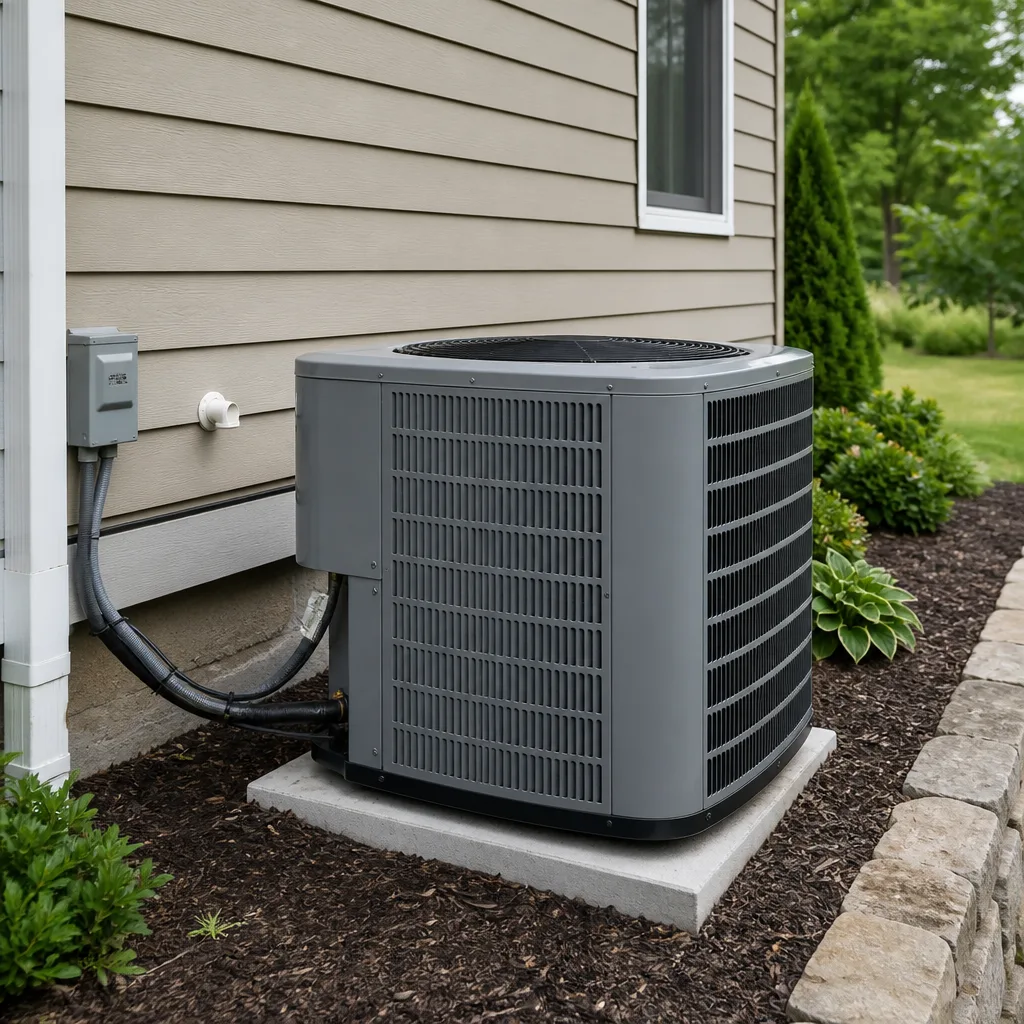 Carrier
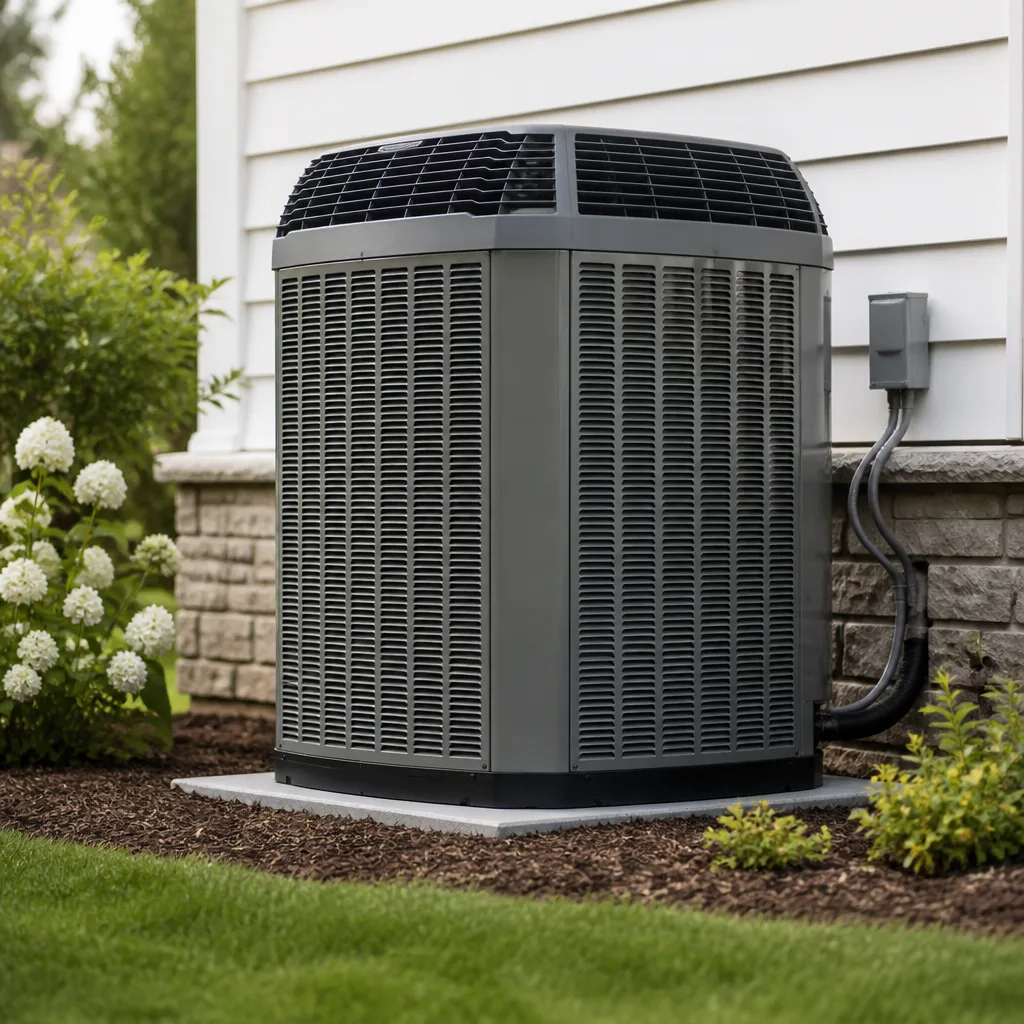 Trane
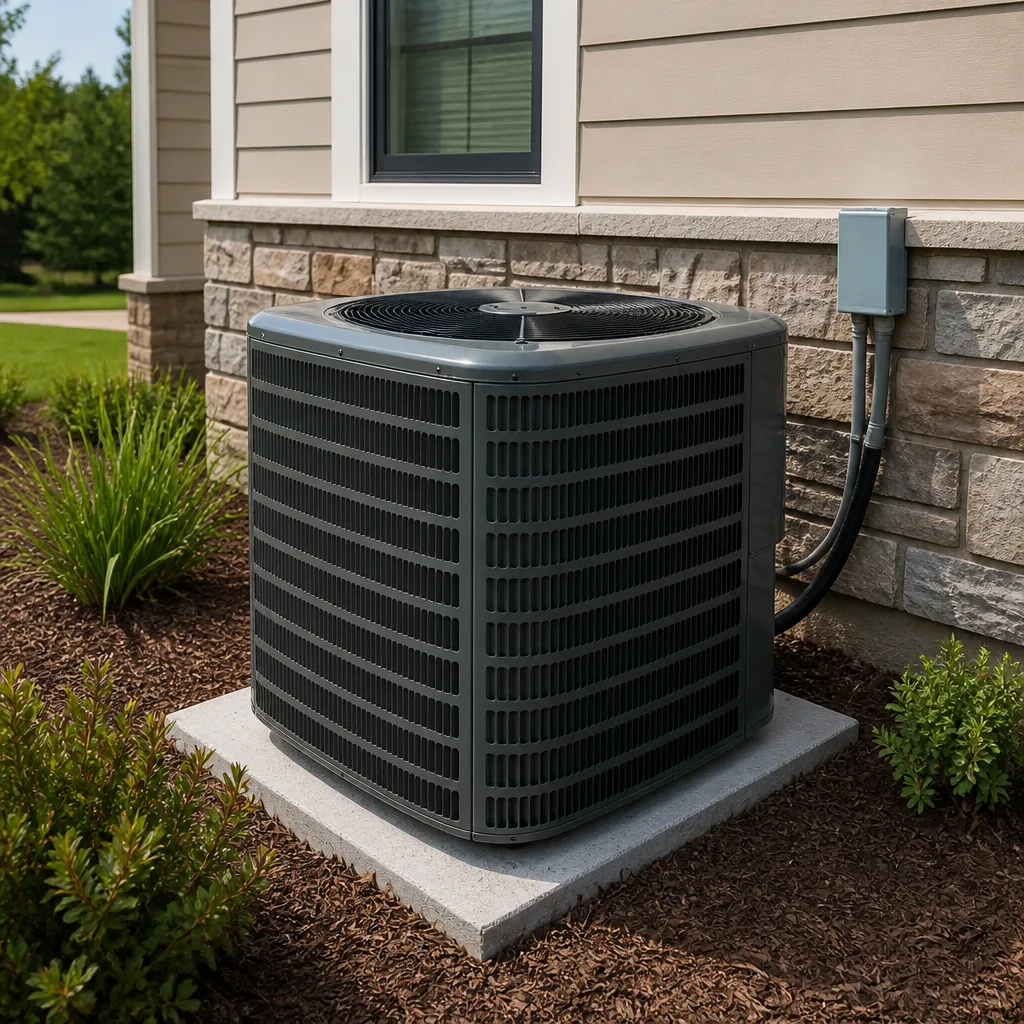 Goodman
Seasonal tune-up and full diagnostic on your Carrier, Trane, or Goodman system - readings shown to you before any repair is proposed
Diagnosis first, numbers second - you approve the repair price before a single part goes in.
Get your free estimateAC Installation Troubleshooting in Davie: Common Problems and How to Fix Them
When a brand-new AC system isn’t cooling properly, the instinct is to blame the unit. The more likely culprit: the installation created a static pressure problem your new equipment is now fighting every hour it runs. Air that can’t move through undersized returns, sagging flex duct, or a cabinet sealed with mastic over the wrong seams will make even a premium Lennox or Trane system behave like a failing one. We’re not describing a rare edge case, either. In our experience across Davie, most “the new AC doesn’t work” calls trace back to the install, not the box. This guide maps symptoms to root causes so you can describe what’s actually wrong instead of just reporting that it doesn’t cool right.
Quick Answer
If your new AC isn’t cooling properly after installation in Davie, the problem is usually one of four things: an airflow restriction from the install (sagging flex duct, a return that’s too small, a leaky air handler in a hot attic), an oversized system short-cycling because it was sized by rule of thumb instead of a load calculation, a refrigerant charge or startup error left behind during commissioning, or a genuine equipment defect. Of those four, only one is the manufacturer’s responsibility. The other three are installation issues, and they present differently. Measuring the temperature split at the return and supply registers tells you which camp you’re in before anyone touches a wrench.
Styles & brands we work with
- AC repair
- Furnace & heating
- Heat pumps
- Ductless mini splits
- Carrier
- Trane
- Goodman
Table of Contents
- How to Tell an Equipment Defect from an Installation Error
- Why Short-Cycling After a New Install Usually Means Oversizing
- The Davie Ductwork Problems That Look Like Equipment Failure
- Static Pressure: The Measurement Most Homeowners Never Hear About
- How to Document a Problem So Your Contractor Moves Fast
- Warranty Coverage: Installation Workmanship vs. Manufacturer Defect
- What a Proper Startup and Commissioning Should Include
- When to Call a Professional
How to Tell an Equipment Defect from an Installation Error
The temperature split is the difference between the air going into your return and the air coming out of a supply register. On a properly charged and commissioned system, that spread typically lands somewhere in the high teens to low twenties in degrees Fahrenheit, though the exact target depends on indoor humidity and the equipment’s rated capacity. If your split is in that range but the house still feels warm, the problem is likely distribution, not cooling capacity. If the split is far below that, refrigerant or airflow is suspect. If it’s unusually high, you may have restricted airflow across the coil.
Here’s how to take a rough measurement yourself, safely, without opening any panels:
- Let the system run at least 15 minutes so it reaches steady state. A short burst won’t tell you much.
- Hold a probe thermometer in the return airstream near the filter grille, or at the return duct if you have one. Note the reading.
- Hold the same thermometer in a supply register airstream, ideally one far from the air handler. Note the reading again.
- Subtract. That number is your approximate split.
This isn’t a substitute for a technician’s manifold gauges and static pressure readings, but it’s enough to know whether you’re dealing with a capacity problem, a charge problem, or an airflow problem. It also gives you specific language when you call. A homeowner who says “my split is around eight degrees and the house won’t drop below 78” gets a faster, more focused response than one who says “it doesn’t feel cold.” That distinction matters in Davie, where summer humidity means a system can be running constantly and still feel like it isn’t keeping up.
If your split falls in the normal range and the house is still hot, the next step is checking every supply register for airflow. Weak airflow at the farthest registers, or a bedroom that never cools, points to ductwork or the return, not the condenser. That’s an installation review, not a warranty claim.
Why Short-Cycling After a New Install Usually Means Oversizing
If your new system comes on, runs for a few minutes, shuts off, and repeats that cycle all afternoon, the equipment itself is probably fine. That pattern is classic oversizing. A system that’s too large for the house cools the air quickly but doesn’t run long enough to pull the humidity out of it. So the house feels clammy and cool at the same time, and the compressor cycles on and off more than it should. In our experience, a rule-of-thumb tonnage estimate instead of a proper load calculation is the most common reason a new install in Davie gets sized wrong.
A load calculation accounts for square footage, window orientation, insulation, ceiling height, duct location, and how much shade your home gets. A house in a Davie neighborhood with older construction and mature tree cover is not the same load as a newer build down the road, even at the same square footage. When a contractor skips the calc and installs a tonnage based on “our usual number for this size house,” oversizing is the predictable result. The good news is that oversizing is fixable, though it’s not always cheap. Your options, roughly in order of expense:
- Airflow correction first. Sometimes the system isn’t truly oversized; the ductwork is just choking it. Fixing the ductwork can restore run times without touching the equipment.
- Control adjustments. A thermostat that’s set up properly, with the right fan and staging settings, can sometimes stretch run times enough to improve dehumidification.
- Equipment change. If the system really is too large for the house, that’s the expensive conversation. It’s also the one a contractor who sold you the oversized unit often resists.
That last point is why the sizing question matters so much. A company that carries exclusive dealer agreements for a single brand can have an incentive to move the equipment they already ordered. A brand-agnostic shop can tell you the truth: a properly sized Rheem or York system that fits the house will outperform an oversized Lennox every time. We work on your system, not just the brands we prefer to sell, because the honest answer about sizing shouldn’t depend on what’s sitting in inventory.
The Davie Ductwork Problems That Look Like Equipment Failure
The attic is the worst place in any Davie house to put anything that needs to work hard. Attic temperatures here climb past 130 degrees on a still summer afternoon, and that heat does a number on the flex duct and air handler up there. Three duct problems masquerade as equipment failure more than any others we see:
Flex duct sagging. When a flex run sags, it pinches the inside diameter of the duct and chokes airflow to whatever room it feeds. A room that never cools, or one supply register blowing far weaker than the others, is often just a sagging run. Undersized return duct causes a similar symptom across the whole house: the air handler can’t pull enough air in, so the system starves regardless of how good the compressor is.
Poorly sealed air handlers. An air handler cabinet that’s not sealed at the seams and duct connections will leak cool air straight into the attic. It’s a double problem: the conditioned air you paid for escapes, and hot attic air gets drawn in through return leaks. The result is a system that runs constantly, never quite hits temperature, and drives your power bill up while it does it.
Insulation that’s no longer doing its job. Flexible duct insulation degrades with heat and age. When the outer jacket is torn or the insulation has broken down, the duct loses its ability to keep the cool air cool on the way to the register.
None of those show up on a refrigerant gauge. That’s why a technician who checks the equipment and nothing else will tell you the system is “running fine” while you’re still sweating. A proper diagnostic includes a visual and pressure check of the duct system, especially in a Davie attic where the temperatures are brutal for eight months a year. If you’re comparing contractors, it’s worth asking whether a duct inspection is part of their startup process or an add-on.
Static Pressure: The Measurement Most Homeowners Never Hear About
Static pressure is the resistance to airflow inside your duct system. Every bend, transition, filter, and coil adds some. When the total gets too high, the blower has to work harder to move the same air, and it moves less air than the equipment was designed for. High static pressure shows up as weak airflow, a noisy blower, a coil that ices up, and a compressor that runs hotter and shorter than it should. It’s the root cause behind a lot of what looks like equipment failure in Davie, and it’s the measurement you should ask about if your new system isn’t performing.
The fix depends on where the pressure is coming from, and the order matters:
- Check the filter first. A high-MERV filter on an undersized return is a common culprit in newer installs. The system was sized for the home, but the filter added restriction nobody accounted for.
- Measure return-side static. If it’s high, the return duct is undersized or overly restrictive. Adding return capacity is often the biggest single improvement.
- Measure supply-side static. High supply static means the distribution duct is choked. Reducing fittings, straightening flex runs, or upsizing key branches helps.
- Check the air handler cabinet and coil. A dirty coil or an overly tight cabinet with restrictive internal baffles adds pressure you can’t fix at the register.
What you want is a technician who measures static pressure at startup and records it. If nobody did, that’s a gap. Good readings taken after installation are your proof the equipment was given a fighting chance. A good question to ask before your install is scheduled: will the technician record static pressure, temperature split, and refrigerant charge at commissioning? If the answer is “we check it as we go,” push for the numbers.
How to Document a Problem So Your Contractor Moves Fast
A vague complaint gets a vague response. “It doesn’t cool right” can be a refrigerant leak, a duct problem, a thermostat setting, or a homeowner whose expectations don’t match what the equipment can do, and a contractor will often walk the easiest path first. Detailed documentation gets you past that. When you describe the problem with specifics, the technician arrives already pointed at the likely cause instead of starting from zero. Here’s a list worth keeping on your phone when you call:
- The temperature split. Return and supply readings, plus the time of day you took them. A split of 10 degrees at 3pm tells a different story than a split of 10 degrees at 8am.
- Run times. Note how long the system runs before it shuts off, and how long it stays off. Short cycles point at oversizing; long runs without hitting temperature point at capacity or airflow.
- Room-by-room performance. Which rooms cool, which don’t, and whether the problem is worse at certain times of day.
- Sounds and smells. Any new noises from the air handler or outdoor unit, plus any musty smell that appeared after the install.
- A humidity reading. A cheap hygrometer tells you whether the house is staying dry. High humidity with cool air is a strong oversizing signal.
- The installation paperwork. Model numbers, commissioning notes, and any static pressure readings taken at startup. Photo-copy the install label on the outdoor unit before it fades.
Send that list to your contractor before the visit, not after. It changes the conversation. Most installers want a system working correctly; the ones who respond badly to specific data are usually the ones who’d rather re-explain than re-inspect. If your installer isn’t responsive, a second opinion from a brand-neutral shop is a reasonable next step. Nine brands. Two systems. One call. That’s the difference between a contractor who has to defend their own work and one who can just tell you what they find.
Warranty Coverage: Installation Workmanship vs. Manufacturer Defect
These are two separate claims, and mixing them up is the most common reason a post-install problem gets stalled. A manufacturer’s parts warranty covers the equipment itself: a failed compressor, a leaking coil, a control board that dies young. An installation workmanship warranty covers what the installing company did, or didn’t do, during the install: the refrigerant charge, the duct sealing, the electrical connections, the static pressure calibration. When a problem appears after a new install, the first question is which category it falls into, because the claim goes to a different party.
The manufacturer warranty doesn’t depend on who you call, only on the equipment. Any factory-authorized technician can file a parts claim on your Carrier, Goodman, or Daikin system, and the paperwork goes through the manufacturer regardless of who initially installed it. What you often lose by switching contractors is the workmanship side of the coverage: the installing company’s workmanship warranty sticks with them, not with the equipment. Your homeowner responsibility is the labor the manufacturer warranty doesn’t cover, which is why it pays to know whose policy you’re chasing before you pick up the phone.
A few practical rules keep the warranty process clean:
- Register the equipment. Most manufacturers require registration at the time of install. If your contractor didn’t handle it, do it now.
- Keep the installation paperwork. Model and serial numbers, commissioning readings, and the workmanship warranty terms all belong in one folder.
- Ask for the diagnosis in writing. If a technician blames a defective part, get the model and the failure mode documented. If they blame the install, get that documented too. The written diagnosis is what makes a warranty claim move.
- Don’t let a second contractor quietly void the workmanship coverage. Ask before anyone starts work on a system that’s still under the original installation warranty.
For more on how this plays out on a full replacement, our AC installation page walks through the process from load calculation to commissioning. The point to hold onto: a documented install protects you, and a manufacturer defect is not the same claim as a workmanship error. Keep the two apart when you talk to either party.
What a Proper Startup and Commissioning Should Include
Commissioning is the part of an install that most homeowners never see and rarely ask about, and it’s the part that determines whether the first summer goes smoothly. A system that’s bolted in and energized isn’t the same as one that’s been verified. Anything short of the following list leaves room for a problem to surface a month from now when the weather gets serious. Here’s what good commissioning looks like:
- A load calculation on file. The tonnage installed should match the calculated load, not a rule of thumb. Ask for the calc if you haven’t seen it.
- Static pressure readings. Return and supply, documented on the startup sheet. If it’s not written down, assume it wasn’t checked.
- A verified refrigerant charge. Weighed in or verified by superheat/subcool, not just “the gauges looked good.”
- Temperature split measured. Supply and return readings with the house at normal conditions, not a quick check on a cool morning.
- Duct leakage check. Seams on the plenum, cabinet, and accessible connections checked for leaks in the attic.
- Electrical verification. Proper breaker size, disconnect, and wire gauge for the equipment as installed.
- Thermostat programming and homeowner walkthrough. Fan settings, staging, and hold behavior explained so you know what the system is supposed to do.
If any of those items is missing, ask for it before you sign anything. That’s also when to ask which furnace repair coverage applies if you’re heating with the same system’s electric heat strip, since commissioning and workmanship coverage should carry across both. Good contractors will happily produce the startup sheet. The ones who won’t are telling you something.
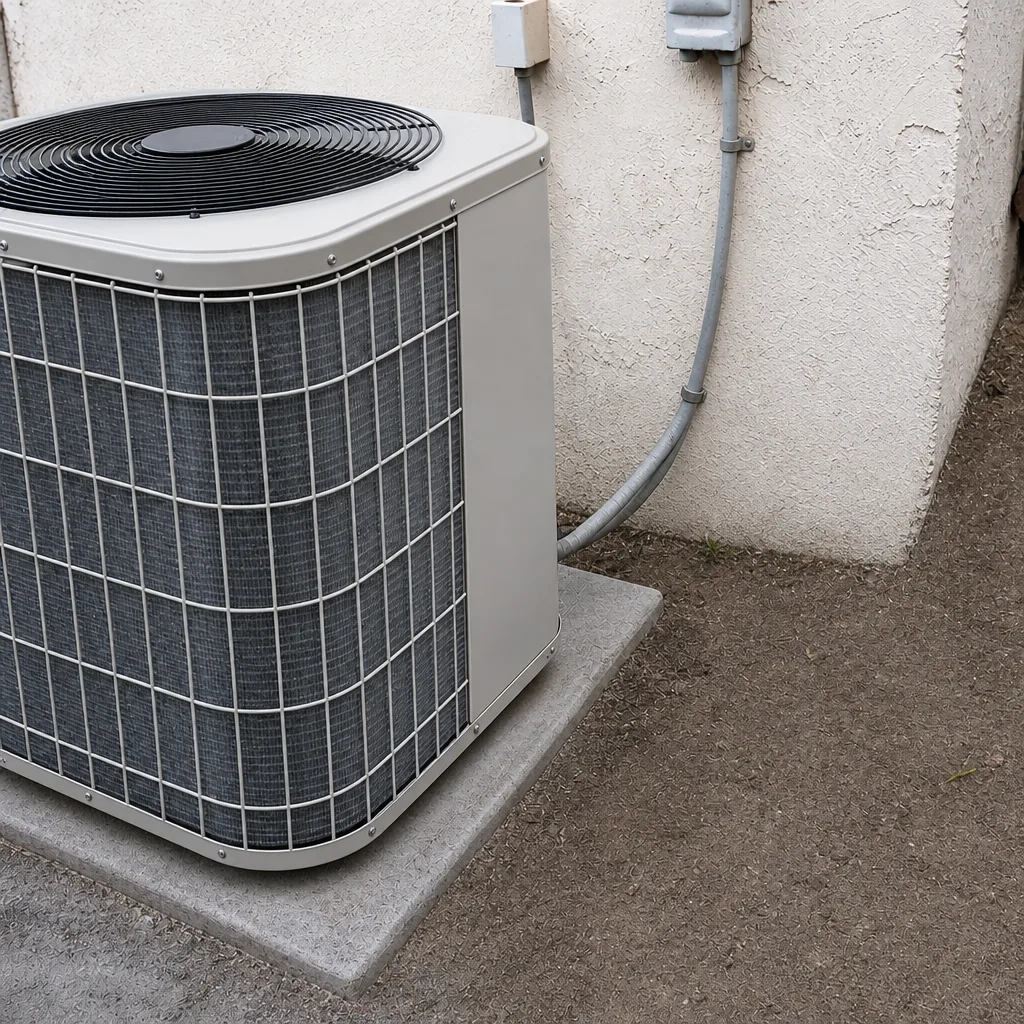
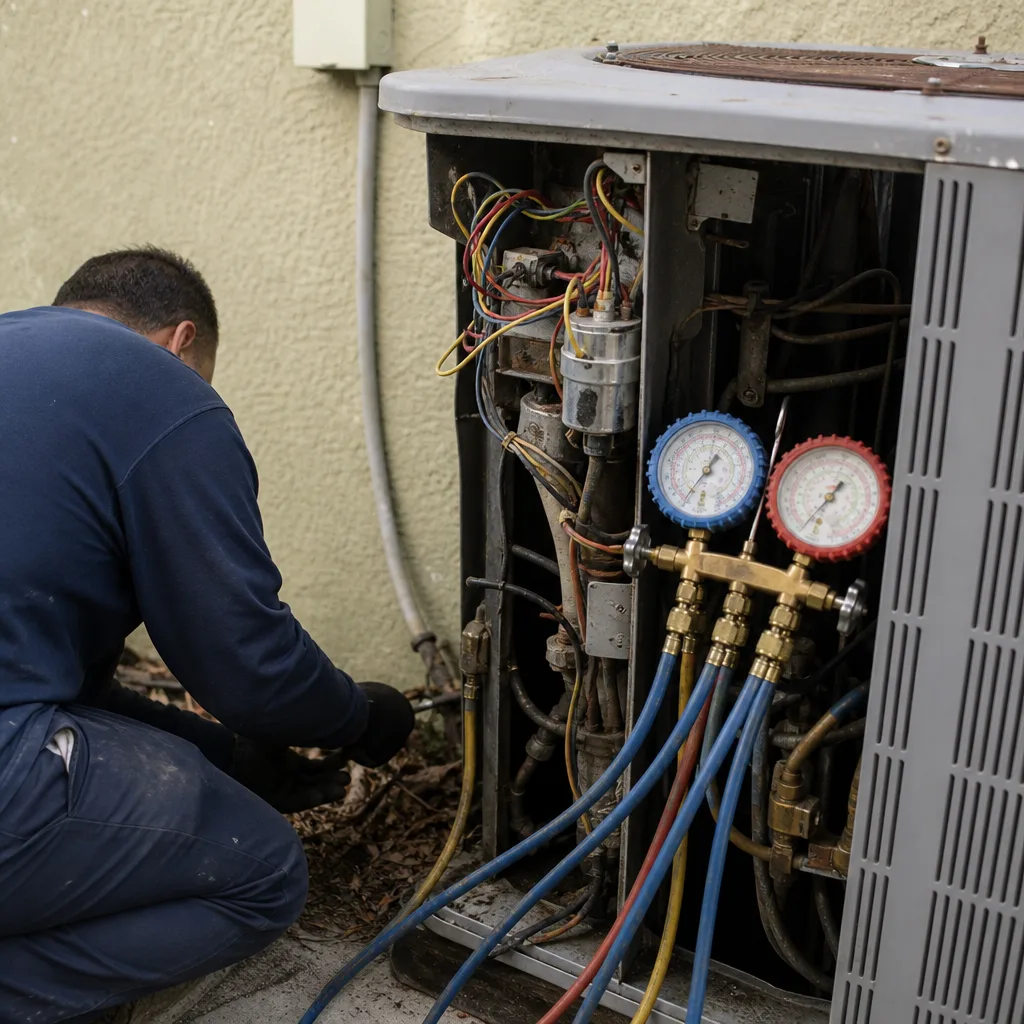
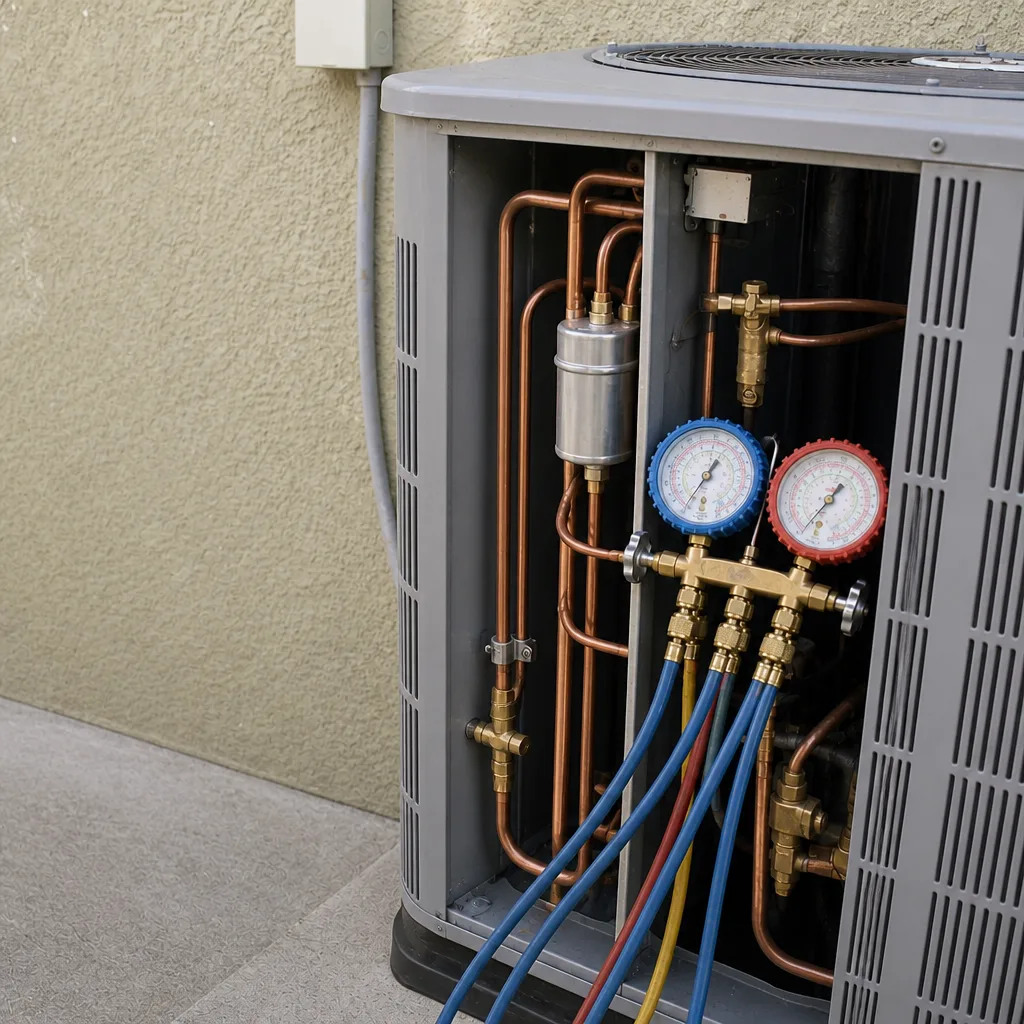
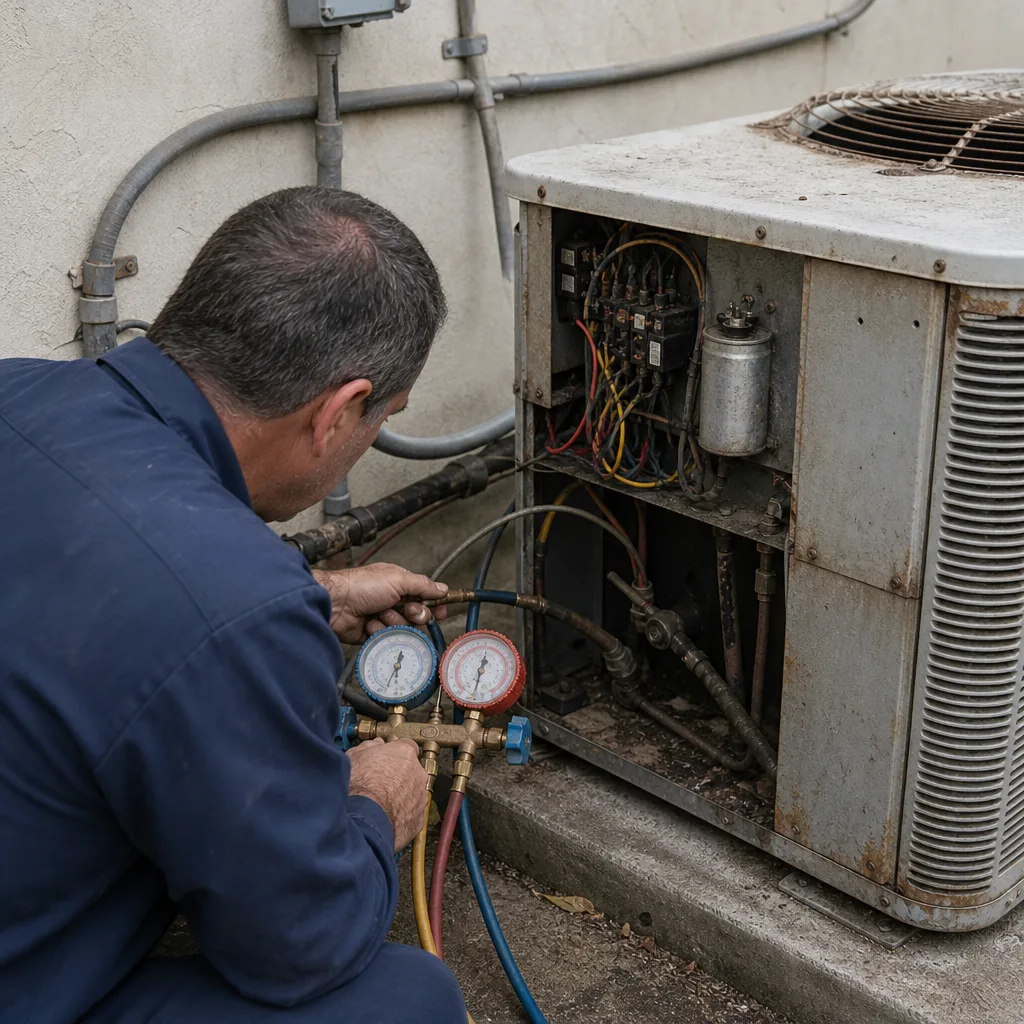
See the difference
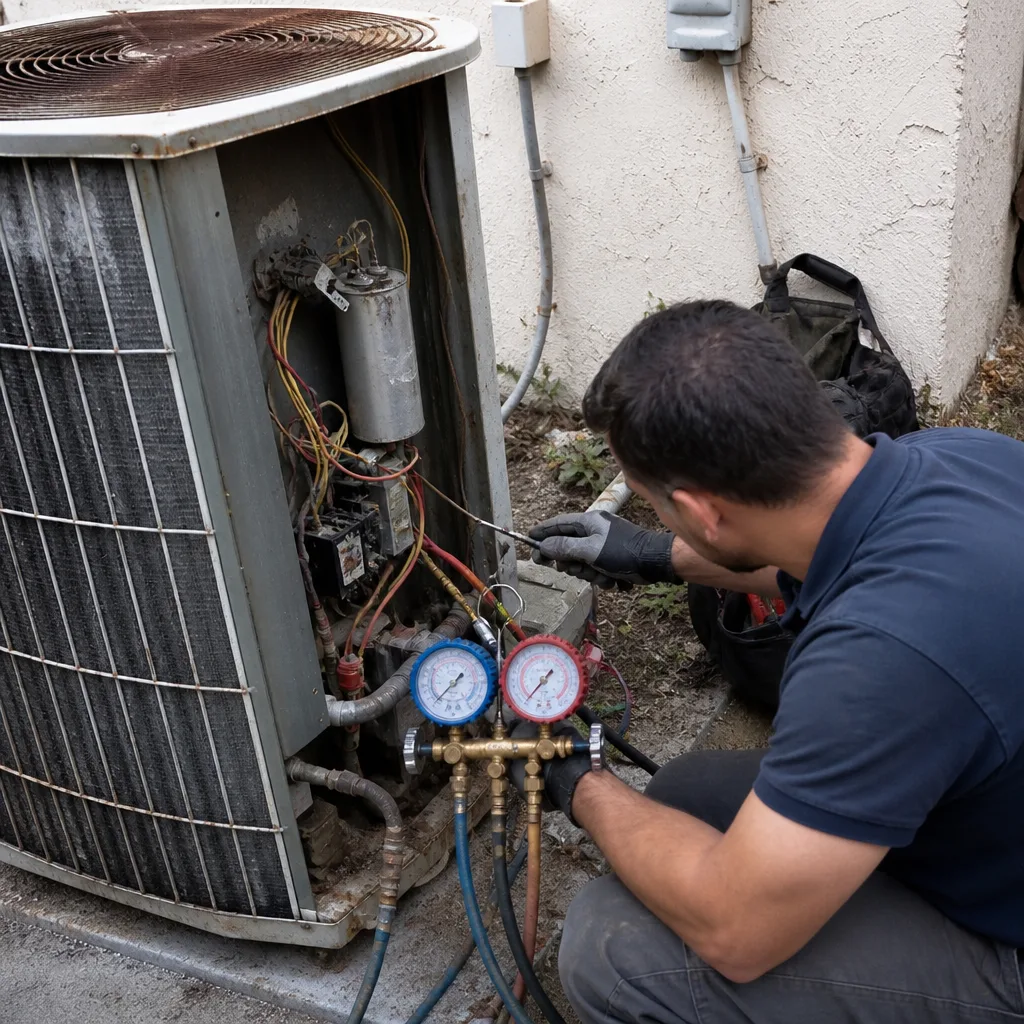 Before
 After
 Before
 After
 Before
 After
Common Mistakes to Avoid
- Blaming the equipment first. A new system that underperforms is more often an airflow or charge problem than a bad compressor. Get the static pressure and split measured before you accept a “defective unit” diagnosis.
- Accepting a rule-of-thumb tonnage. A ton-per-500-square-feet estimate might work in a lab, but it doesn’t account for Davie attic heat, window orientation, or insulation. Ask for the load calculation.
- Skipping the duct inspection. A properly charged system connected to sagging flex duct in a 135-degree attic will never perform. If your installer didn’t look at the duct, the system hasn’t really been installed.
- Filing a warranty claim on the wrong party. A refrigerant leak after install is usually a workmanship issue, not a manufacturer defect. Send the claim to the installer first, and only escalate to the manufacturer if the equipment itself failed.
- Letting a second contractor start work before you check the warranty. A quick repair from a new shop can quietly void your installation workmanship warranty. Ask before they open a panel.
- Ignoring humidity because the temperature is close. Cool, clammy air is a sign the system is oversized or running too short. A cheap hygrometer will tell you more than the thermostat will.
- Not keeping the startup sheet. The commissioning readings are your baseline. Without them, you can’t prove a problem appeared after install or was there from day one.
Local note on humidity and setbacks
Davie’s summer humidity means a system can be at the correct temperature and still be a problem. Short run times fail to dehumidify, and that’s why run-time data matters more here than in drier climates. If your house feels cold and damp at the same time, that’s the humidity signal, not the thermostat.
When to Call a Professional
Some post-install symptoms are safe to observe and document. Others need a trained technician on site before the system runs again. Call us if you see ice forming on the indoor coil or the outdoor refrigerant lines, if the compressor short-cycles continuously, if you smell a musty or burning odor from any air handler in an attic, or if the breaker trips and resets repeatedly. Those point at refrigerant, electrical, or blocked airflow problems where running the system can make things worse. High-voltage electrical work and refrigerant handling are not homeowner tasks; a mistake can damage the equipment or injure someone. We’re also the call to make if your installer won’t return, if a warranty claim stalls, or if you want a second opinion on a “replace the whole system” diagnosis for your existing Goodman, Rheem, or other unit.
Davie AC Repair offers free estimates in Davie. Call (833) 548-1941. We answer 24/7. Fast dispatch from 7am to 7pm, Sunday through Friday. Our technicians have up to 15 years of experience, and we’re licensed and insured. If you’re near Davie and your new system isn’t behaving, we can measure the static pressure, verify the charge, and give you straight answers about whether the problem is the install, the equipment, or the ductwork.
Frequently Asked Questions
In most cases it’s one of four things: a duct or airflow restriction created during the install, an oversized system short-cycling, an incorrect refrigerant charge or commissioning error, or a genuine equipment defect. The first three are installation problems, not manufacturer problems, which is why the fix usually starts with a static pressure and temperature split check rather than a warranty claim. Call (833) 548-1941 for a free estimate if you want a second opinion on the diagnosis.
Measure the temperature split between your return and a supply register yourself. A split in the high teens to low twenties suggests the system is cooling but distribution is failing; a much lower split points to refrigerant or airflow; a much higher one suggests restricted airflow across the coil. No split in the normal range with a hot house almost always means the install or the ductwork, not the equipment. Call (833) 548-1941 for a professional measurement if you’d rather not guess.
Short cycling after a new install usually means the system is oversized for the house, not that the equipment is defective. A system that’s too large cools the air quickly, shuts off before it dehumidifies, and repeats the cycle all afternoon. The first question for your installer is whether a load calculation was done or whether the tonnage came from a rule of thumb. Call (833) 548-1941 for an assessment.
No. The manufacturer’s parts warranty covers the equipment, and the installing company’s workmanship warranty covers what they did during the install, including the refrigerant charge, duct sealing, and startup calibration. A failed compressor after a new install is usually a workmanship claim, not a parts claim. Keep the two straight and send each claim to the right party. Call (833) 548-1941 if you need help sorting out which one applies.
Any factory-authorized technician can service the equipment and file a manufacturer warranty claim on your carrier, Goodman, Rheem, York, or other system. What you may give up by switching is the original installing company’s workmanship warranty, which stays with them. A brand-neutral shop is often the right call for a second opinion because they have no incentive to defend the original install. Call (833) 548-1941 for a free estimate.
A proper startup includes a load calculation on file, documented static pressure readings on both the return and supply sides, a verified refrigerant charge, a measured temperature split, a duct leakage check in the attic, electrical verification, and a thermostat walkthrough. If your installer didn’t produce a startup sheet with those numbers, that’s the gap to chase. Call (833) 548-1941 if you want those readings taken and documented.
The Bottom Line
Most post-installation AC problems in Davie come down to airflow, sizing, or commissioning, not the equipment itself. Measure the temperature split before you accept a defective-unit diagnosis. Insist on a load calculation and documented static pressure readings for any new install. Take ductwork in a hot attic seriously, because it fails silently and looks like a bad compressor. Keep your startup sheet, register your equipment, and know whether you’re filing a workmanship claim or a manufacturer claim. And remember that a brand-agnostic technician who works on all nine major brands has no reason to defend a bad install or sell you equipment your house doesn’t need. Repair first, replace only when it makes sense for you. If you’re in Davie and your new system still isn’t cooling right, call (833) 548-1941 for a free estimate. We answer 24/7. Fast dispatch from 7am to 7pm, Sunday through Friday.
For more on our full range of service, see Davie AC Repair.
Written by the team at Davie AC Repair.